

The Defensive Distribution Strategy Most Grocers Haven't Built
Marketplaces aren't your partners. They're your landlord.

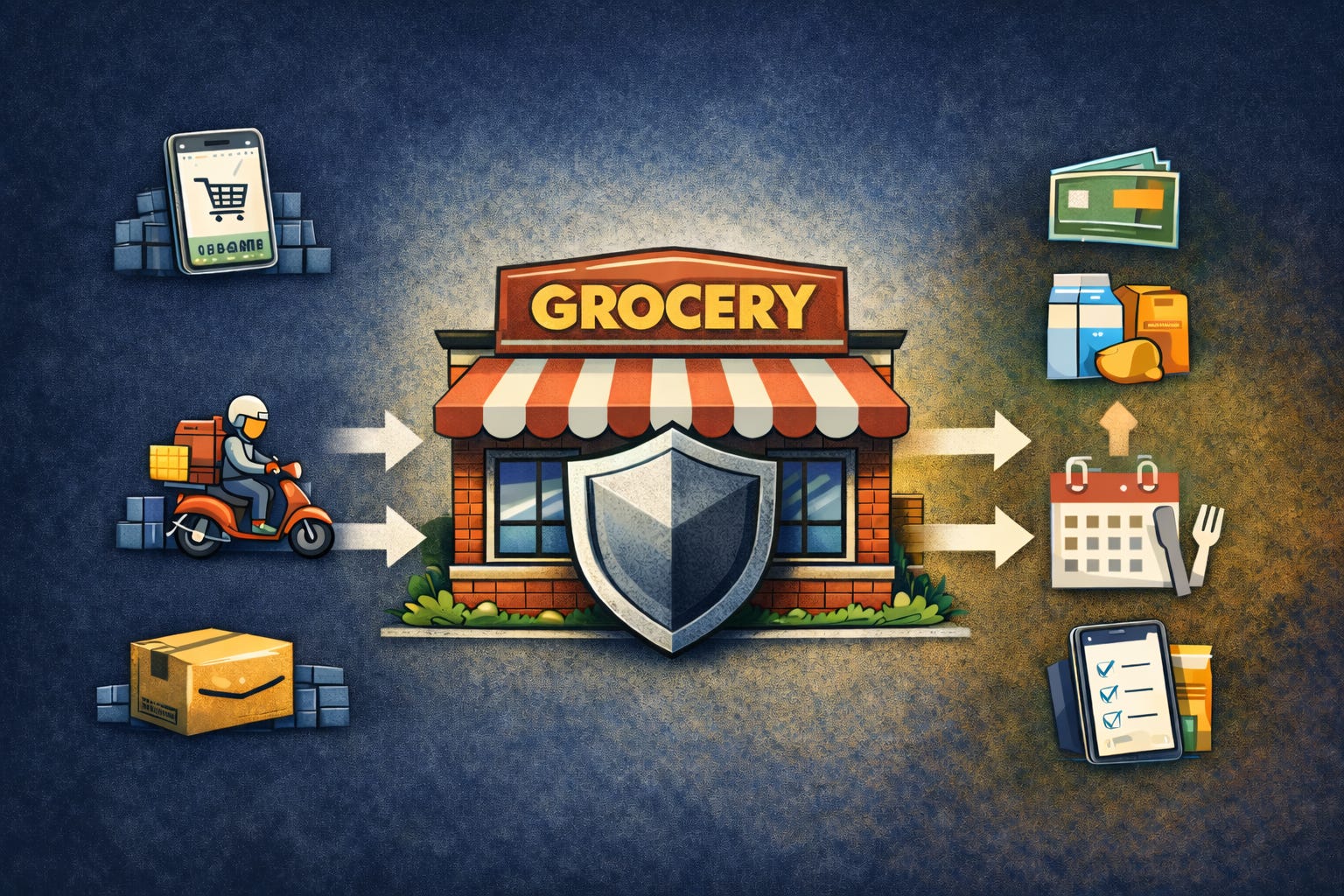
This is the ninth post of a 10-part series: The Marketplace Trap. If you’re starting here, it’s best to review the first post.
Most grocers think their digital strategy is about growth. It isn’t. It's about distribution control, and right now they're quietly handing it to someone else.
For decades, the shopping journey started with a store choice. You picked Kroger or Publix or whoever, drove there, and filled your cart. The grocer controlled the beginning, so they controlled everything that followed.
Digital broke that sequence. Now the journey starts somewhere else. A marketplace. A delivery app. An AI agent rattling off recommendations. The grocer still picks and packs the order, sure. But they didn’t get to make the first impression. They didn’t set the frame. They just... fulfilled.
And fulfillment businesses don’t own customers. They rent them.
Marketplaces aren’t your distribution partners. They’re your competitors. When a shopper opens a marketplace, they stop thinking about which grocer they prefer. They’re browsing products and prices inside someone else’s system.
Marketplaces control what gets surfaced, how substitutions work, which sponsored items appear, and who wins the search result. The grocer is just the warehouse in the back.
That’s not partnership. That’s dependency.
The cruel irony is that grocers often drove customers to these platforms themselves, chasing digital growth numbers while quietly ceding the one thing that actually matters: where the shopping decision starts.
Costco figured this out decades ago.
92% of Costco members renew every year1. That number isn’t just impressive, it’s the whole business model. When someone pays an annual membership fee, the shopping decision is already made before they’ve bought a single thing. They’re not comparison shopping on a Tuesday night. They’re going to Costco because they’ve pre-committed.
Amazon did the same thing with Prime. You join, and the default destination is set. No deliberation. No competitive frame. Just: where do I buy this? Amazon.
That’s defensive distribution. You don’t win the trip. You win before the trip.
Grocery, almost entirely, has not built this.
⚔️Every basket is a fresh fight. And marketplaces are making it worse.
Most grocers compete transaction by transaction. Each trip is contested. Each price comparison matters. And marketplaces don’t just maintain that dynamic, they amplify it. Instead of fighting the store across the street, a grocer suddenly competes against every store in the metro area simultaneously, inside an interface they don’t control, with ranking logic they can’t see.
That’s not a digital strategy. That’s a margin compression machine with a nice app on top.
So what does a defensive distribution strategy actually look like in grocery?
Here's what within reach looks like:
🛒Own the list before the trip.
Partner with or build a basic shopping list app. Nothing fancy. Just get the list to live in your ecosystem, not Notes or Alexa. Whoever holds the list influences the purchase.
🔮Make your loyalty program actually predictive.
Most loyalty programs reward past behavior. Flip it: use purchase history to anticipate the next trip and push a personalized “your usual order” prompt before the shopper even thinks about it.
📬Win the weekly email.
Sounds boring. It works. A genuinely useful weekly email with meal ideas tied to what’s on sale creates a habit loop that starts with you, not a marketplace.
🏆Own one high-frequency category deeply.
You can’t out-Amazon Amazon. But you can become the undisputed destination for, say, local produce or fresh bakery. Own a category so well that it pulls people into your ecosystem first.
🔁Reinforce the habit at checkout.
Grocers don’t need a full ecommerce platform to influence repeat purchasing behavior. A loyalty‑linked receipt that surfaces “your most purchased items” can reinforce predictable reorder patterns. A targeted “buy again” prompt within the loyalty app can deliver the same effect without the cost or complexity of a full digital commerce stack. A small, well‑timed nudge delivers the same behavioral impact.
Each of these moves in the same direction: the shopping journey begins with you, not with someone else’s platform.
The real question isn’t “how do we grow digital?”
It’s: who owns the starting point?
Because whoever controls where the decision begins almost always wins the basket. Costco owns the starting point. Amazon owns it. The companies that don't own it end up competing inside someone else's system, on someone else's terms, with shrinking leverage every year.
The companies that win don't show up to the game someone else built.
🏗️They build the game.
Most grocers still haven't touched this. That's the opportunity, and the risk.
The Marketplace Trap is a 10-part series on why mid-tier grocers are handing customer ownership to platforms, and what they can do to take it back.
The full series:
“Costco’s Membership Model Continues to Deliver Predictable Growth.” Zacks: https://finviz.com/news/297685/costcos-membership-model-continues-to-deliver-predictable-growth